

What Happens After the Pour: How to Protect and Maintain Fresh Concrete in Warm Weather
May 8, 2026
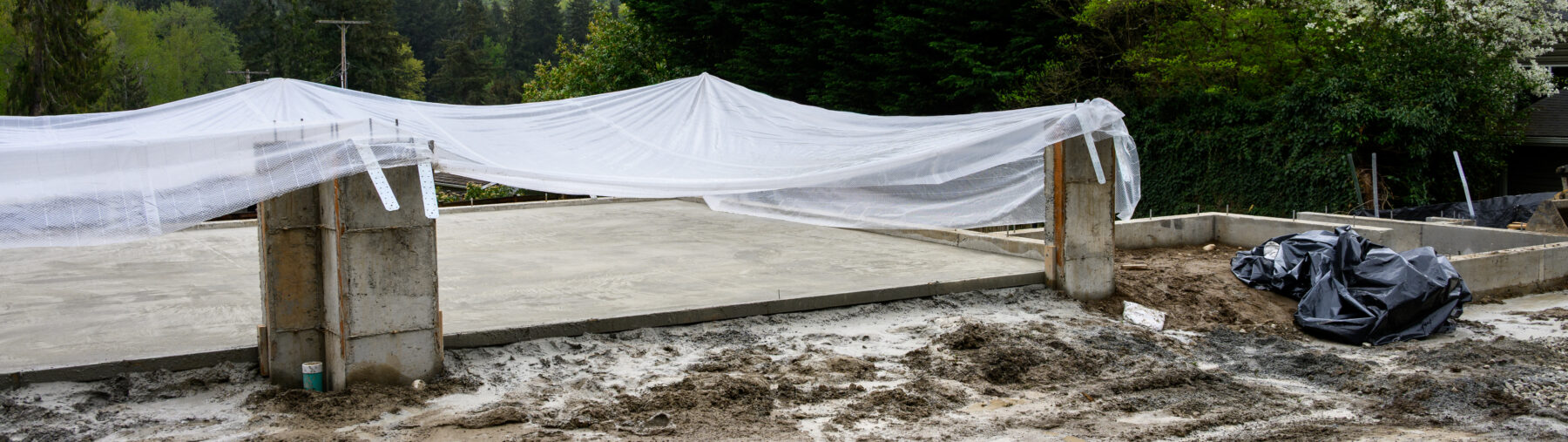
Rising slab temperatures begin reshaping fresh concrete the moment that it’s poured. Warm air pulls moisture from the surface faster than hydration can use it, and that imbalance opens the door to cracking, weak surfaces, and uneven finishes. Warm weather placement calls for a specific sequence of protection steps during the hours immediately after discharge. This article walks through the field actions that keep a fresh pour stable from final strike-off through the curing window.
How Heat Changes the Behavior of Fresh Concrete
Hydration generates internal heat on its own, and external temperatures above 80 degrees Fahrenheit compound that chemical reaction. Cement particles bond faster than the mix can bleed water to the surface, which shortens working time and accelerates initial set. Finishers often feel this shift within minutes, especially on slabs placed under direct sun or low humidity.
Once finishing begins, surface evaporation becomes the next pressure on the slab. Wind speeds above 10 mph, ambient heat, and exposed subgrades can pull water from the slab at rates exceeding 0.2 pounds per square foot per hour. When evaporation outpaces bleed water, plastic shrinkage cracks open across the surface before the concrete reaches final set.
Staging the Job Site Before the Truck Arrives
Site preparation shapes how well the slab responds to heat during placement. Subgrades should be dampened ahead of delivery so the ground pulls less moisture from the bottom of the fresh pour. Forms, reinforcement, and tools benefit from the same cooling treatment, since any hot surface in contact with the mix will draw heat into the slab and speed up hydration at that point.
Around peak afternoon heat, the hours on either side offer valuable windows for fresh pours. Early morning placements move the concrete through its initial set before ambient temperatures climb, and evening pours pass the slab through early hydration under cooler air. Coordinated ready mix delivery keeps trucks moving steadily so mix temperatures stay within the specified range from batching through discharge.
Adjusting the Mix for Warm Weather Conditions
Mix temperatures above 90 degrees Fahrenheit shorten set times and reduce bleed water availability, so producers adjust the formulation before the load leaves the plant. Chilled batch water, ice substitutions, and cooled aggregate stockpiles bring the delivered temperature down by 10 to 20 degrees. Set-retarding admixtures extend workability without sacrificing the targeted compressive result, which gives crews more time to place, consolidate, and finish.
Inside thick pours, internal heat rises quickly, so supplementary cementitious materials such as fly ash and slag cement enter the formulation to slow the reaction. These replacements release heat more gradually, which limits thermal gradients across the slab and reduces the risk of internal cracking. Close coordination between the ready mix provider and the placement crew keeps these mix adjustments matched to the day’s actual conditions.
Protecting the Surface During Placement and Finishing
Evaporation retarders applied after strike-off form a thin film across the bleed water, slowing moisture loss while crews work the surface. Fog sprays create a humid layer above the slab without adding water to the mix, which drops the vapor pressure pulling moisture from the concrete. Temporary windbreaks and sunshades shift the microclimate above the pour and cut evaporation rates significantly.
As bleed water dissipates from the surface, the finishing window opens, since early troweling traps water beneath the top and weakens the wear layer. Warm conditions tighten that timing window, and experienced finishers read the slab’s behavior rather than the clock. Consolidation with vibration, controlled floating, and carefully timed troweling shape a dense, closed surface that resists early wear.
Curing the Slab Through the First Week
Moisture retention during the first seven days drives the final strength gain and surface hardness of the slab. Wet burlap, plastic sheeting, curing compounds, and soaker hoses all maintain the surface moisture hydration needs to continue. A curing compound applied immediately after finishing seals the slab and limits evaporation through the early set period, while wet curing methods deliver stronger results on exposed slabs such as driveways, industrial floors, and parking pads.
Direct sun and warm air continue reaching the slab during this window, so shade cloth, light-colored coverings, and continued fog spraying hold the surface closer to the ambient air temperature and prevent the top from drying faster than the core. Regular checks on moisture and slab temperature through the first 72 hours catch problems before they develop into shrinkage cracks or surface dusting.
Warm weather pours reward preparation, steady coordination with the ready mix supplier, and disciplined curing once placement finishes. Pour planning around air temperature, mix adjustments matched to the day’s conditions, and surface protection through the curing window keep the slab intact and ready for service. A conversation with Interstate Concrete & Asphalt ahead of scheduling will help match the mix design, delivery cadence, and curing approach to the specific job, giving every pour the best possible start.