

Before You Build, Pour, or Pave: A Spring Checklist for Getting Your Property Construction-Ready
May 8, 2026
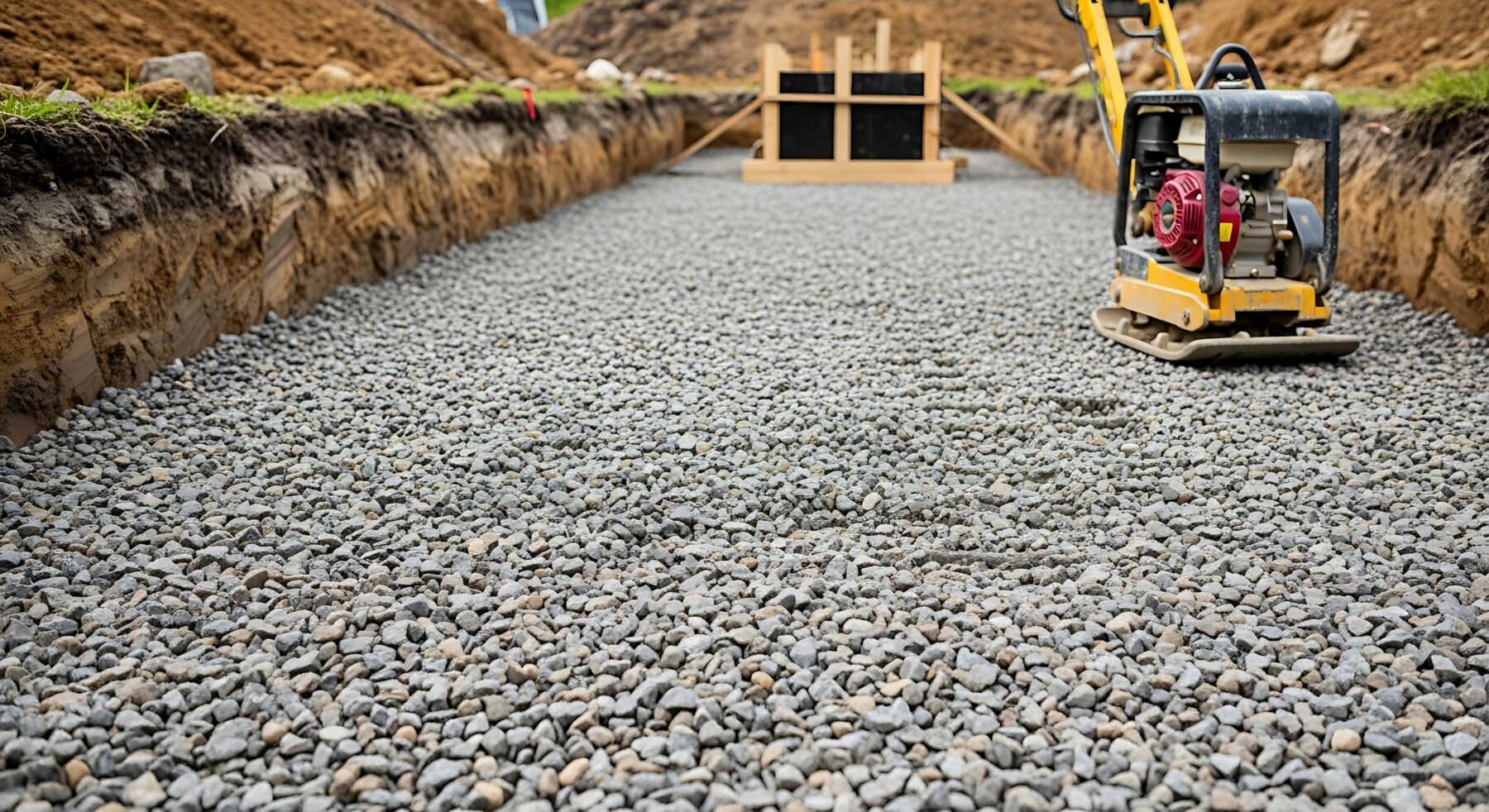
Freeze-thaw expansion places intense pressure on the soil beneath driveways, foundations, and paved areas. Moisture trapped below the surface expands as temperatures drop, lifting base layers before settling again when the ground thaws. That movement rarely returns the ground to its original position. By early spring, the soil beneath a construction site often contains uneven density, soft pockets, and small shifts in grade that are not immediately visible from the surface.
Construction that begins on unsettled ground tends to transfer those hidden shifts into the finished surface. Gravel, sand, aggregates, asphalt, and ready-mix concrete rebuild the structural layers that winter disturbed, but the order in which they are installed matters. Restoring ground stability first allows every material placed afterward to behave the way it was intended once weight and traffic begin moving across the site.
Identifying Ground Movement After Winter
Frozen soil expands upward as moisture crystallizes within the ground structure. When temperatures rise and that ice melts, the soil beneath roads, pads, and walkways settles in irregular patterns rather than compressing evenly.
Certain areas absorb this movement more than others. Low spots often collect water while nearby sections remain firm, creating uneven support beneath the same surface. Early site inspections focus on locating these weak zones so that corrective base material can be placed before structural layers begin forming above them.
Rebuilding Base Layers with Compacted Gravel
Stable construction surfaces depend on a rebuilt base layer capable of carrying weight across the entire footprint of the project. Gravel and crushed stone restore elevation where winter movement displaced soil while spreading loads across the ground below.
Angular aggregates perform especially well in this role. Their fractured edges lock together when compacted, creating internal resistance that limits lateral shifting once vehicles or equipment begin applying pressure. Placed in controlled lifts and compacted layer by layer, the gravel base gradually forms a dense structural platform that supports asphalt pavement or concrete slabs above it.
Controlling Water Movement Beneath the Surface
Spring rainfall and melting snow push additional moisture into the soil profile. Water trapped beneath structural layers increases pressure within the base system, gradually loosening materials that were previously compacted.
Sand and fine aggregates interrupt that cycle by creating drainage pathways through the base structure. Instead of accumulating beneath pavement or concrete, subsurface water moves through these channels and exits toward drainage points. Redirecting that moisture prevents pressure buildup that can otherwise weaken the supporting layers beneath finished surfaces.
Stabilizing the Subgrade Before Paving or Concrete Placement
Every paved surface or concrete slab reflects the condition of the soil beneath it. When subgrade density varies across the construction footprint, structural loads concentrate in weaker areas, eventually producing cracking or settlement in the surface layer.
Graded aggregates spread weight across the ground more evenly, reducing localized pressure on unstable soil. Compaction equipment presses these materials into place until the base layer tightens into a consistent structure across the entire site. Once the subgrade reaches uniform density, asphalt paving crews and ready-mix concrete placements gain the stable support required to maintain their shape under repeated loading.
Sequencing Materials for Early Spring Conditions
Ground conditions during early spring rarely remain consistent for long. Saturated soil, fluctuating temperatures, and occasional late frost can influence how construction materials behave during installation.
Aggregate placement typically occurs first, giving the base layer time to settle and compact before surface materials arrive. Once the structural layer beneath the project stabilizes, paving crews and concrete placements can proceed without risking deformation in the ground structure below. Proper sequencing prevents newly placed surfaces from inheriting instability that originated in the soil.
Rebuilding Structural Layers for the Season Ahead
Spring preparation centers on restoring the layers that carry weight beneath finished surfaces. Gravel rebuilds elevation where the ground shifted during winter, sand directs water away from structural layers, and compacted aggregates distribute loads across the site.
When those materials tighten into place, asphalt pavement and ready-mix concrete gain the stable foundation needed to resist shifting under vehicles, equipment, and seasonal weather. Construction that begins with a properly rebuilt base layer tends to hold its shape through the demands that follow once the project moves into full use.