

5 Things to Know Before Ordering Ready-Mix Concrete for a Residential Project
November 1, 2026
Ordering ready-mix concrete for a residential project involves more than calculating how many cubic yards are needed. The mix itself, site access, delivery timing, and preparation all influence how smoothly the pour goes. Understanding these details before placing an order keeps the project on schedule and the concrete suited to its intended use.
- Which Ready-Mix Concrete Fits the Project?
Ready-mix concrete is batched to a mix design matched to where the slab will sit and what it will carry. A driveway, front walk, or patio goes through repeated freezing and thawing outdoors, so residential concrete guidance for that exposure commonly calls for a mix around 4,500 psi with roughly 6 percent entrained air. Those microscopic air bubbles give freezing water inside the slab room to expand without flaking the surface away. Footings and a basement floor stay out of that cycle and commonly pour at a lower psi without added air.
Integral color is the other mix decision that belongs on the order. Pigment blended in at the plant carries the same shade through the full depth of a tinted patio or stamped walkway, so a chip or a scuff shows the same color underneath. The psi, air content, and color then reach the plant as one set of instructions before the drum is loaded.
- How Much Ready-Mix Should Be Ordered?
With the mix chosen, the amount of ready-mix to order comes from three measurements taken inside the finished forms. Length and width in feet, multiplied by depth in feet and divided by 27, gives the volume in cubic yards. A 20-by-20-foot garage pad poured 4 inches thick works out to just under 5 cubic yards, and a flatwork calculator runs the same conversion in seconds.
Those numbers only hold when the forms are set and the base is graded to final depth before anyone measures. A small allowance above the calculated figure covers minor dips in the base, and confirming the total with the plant ahead of time lets dispatch schedule enough trucks for one continuous placement.
- Can a Concrete Truck Reach the Forms?
Truck access comes next, since that full volume still has to travel from the drum to the forms. A fully loaded 10-yard mixer weighs roughly 66,000 pounds, and its chute typically reaches about 18 feet from the rear tires to the point of discharge. A septic system or freshly graded soil may not carry that weight, so the truck route is planned around buried tanks and soft ground.
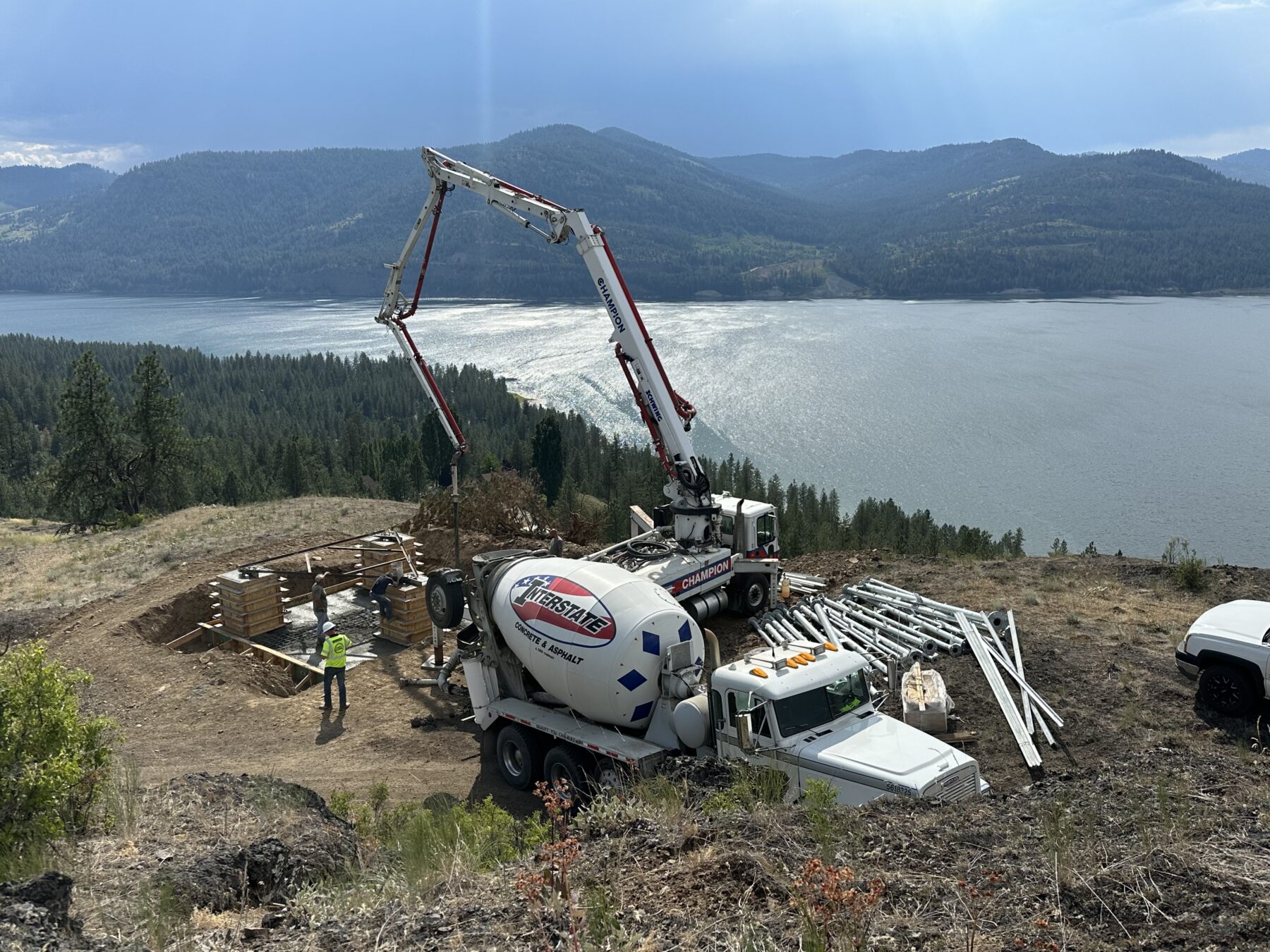
Forms set beyond the chute’s reach, such as a backyard patio behind a fence or a slab on a sloped lot, usually call for a concrete pump or a crew with wheelbarrows. With gates open and overhead lines noted, the truck can back in and start discharging as soon as it arrives.
- When Should a Residential Pour Be Scheduled?
Pour timing on a residential project depends on temperature, both in the air and in the ground beneath the slab. Cold-weather precautions generally apply once the average daily temperature falls below 40°F, and fresh concrete placed in those conditions needs protection from freezing for roughly its first three days. Frozen subgrade settles as it thaws, which can leave a slab resting on uneven support, so the base needs to be thawed and firm on pour day.
Fall pours in a climate with overnight freezes often shift to a late-morning start, with an accelerating admixture or heated mix water batched at the plant and insulated blankets placed once finishing wraps up. These steps follow standard cold-weather concrete practice, and they belong on the order itself because those adjustments happen at batching, before the truck leaves. Warmer weather brings a different set of considerations. Early-morning deliveries can limit exposure to afternoon heat, while set-retarding admixtures may be specified when higher temperatures shorten the available placement time.
- What Happens When the Truck Arrives?
Once the truck is on site, ready-mix concrete has a limited working window, and many project specifications call for placement within about 90 minutes of batching. The forms and the finishing crew need to be in position before the chute swings over, since the mix keeps stiffening in the drum from the moment water meets cement.
Water added at the truck changes the mix more than it appears to. As a widely used rule of thumb, one gallon of water per cubic yard raises slump by about an inch, and that extra water lowers the finished slab’s compressive strength while raising its risk of cracking. Any adjustment goes through the driver and stays within the limits of the mix design, so the concrete placed matches the concrete that was ordered.
From Ready-Mix Order to Finished Slab
A successful residential pour starts with an accurate order and a site that’s ready for delivery. Confirming the mix, volume, and placement requirements with the supplier ahead of time keeps the process moving from batching through finishing.
Interstate Concrete & Asphalt operates more than six NRMCA-certified ready-mix plants across Idaho and Washington, with integral color available for decorative residential projects. Contact us with project measurements and a target pour date to discuss mix selection and delivery.